
Knee cartilage damage exists on a spectrum.
Some injuries respond well to physical therapy, activity modification, or limited surgical treatment. Others do not.
When treating the cartilage surface alone is unlikely to succeed—and continuing with standard approaches may limit your long-term outcome—a more advanced repair strategy may be needed.

At this stage, the goal is no longer just to manage the damage.
It’s to rebuild a healthier joint environment—one that can better support movement and help slow further degeneration over time.

The CARTIHEAL® AGILI-C implant is a specialized treatment designed to help the knee regrow damaged cartilage and heal the bone beneath it.
It’s used during a surgical procedure and placed directly into the area of damage.
Rather than staying in the knee permanently, the implant acts as a temporary support structure.
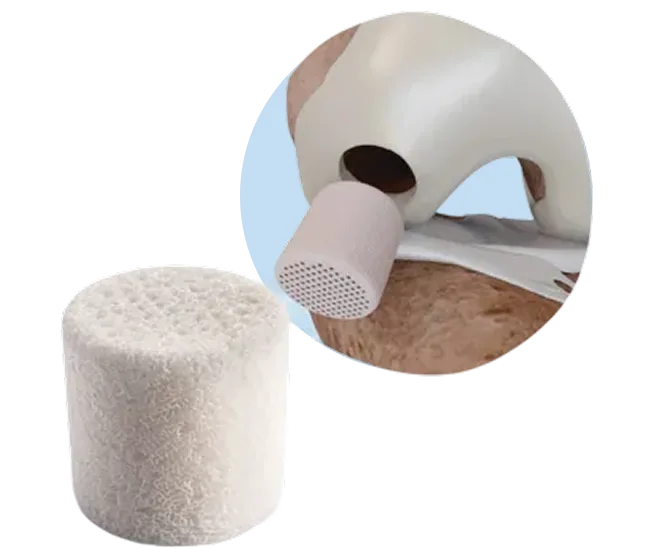
Many cartilage treatments focus only on the surface of the cartilage.
The CARTIHEAL® AGILI-C implant is designed for injuries that go deeper, where both cartilage and underlying bone are involved.
Because it addresses the full depth of the injury, this approach aims to do more than reduce symptoms.
The goal is to restore a healthier, more stable joint environment—one that can better support movement and help protect the knee over time.
When knee cartilage damage becomes deep, persistent, or reaches the underlying bone, it’s no longer a surface problem.
At that point, many standard treatments—designed for earlier or superficial injuries—are simply not built to address the joint’s foundation.
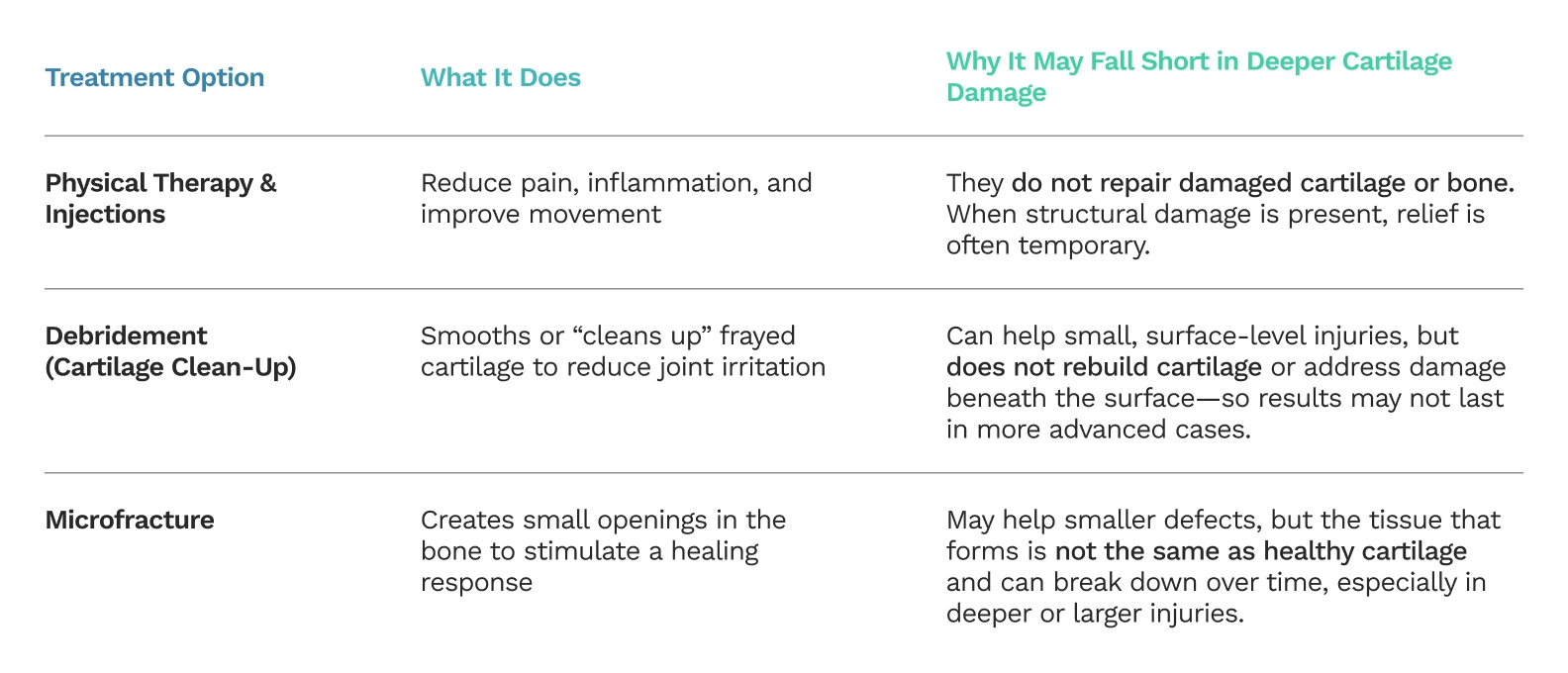
The CARTIHEAL® AGILI-C implant is designed to help the knee heal by supporting the body’s own repair process, rather than simply covering up damage.
It’s used during a surgical procedure and placed directly into the damaged area of the knee.
Identifying and Preparing the Damage
During surgery, the surgeon carefully identifies the area of damaged cartilage and underlying bone.
Unhealthy tissue is removed in a controlled way to create a clean, stable environment for repair.
This step is critical—it ensures the joint is ready to heal properly.
Placing the Implant
A small, precisely sized space is created where the damage exists. The CARTIHEAL® AGILI-C implant is then placed into this area.
The implant is made of calcium carbonate, a material designed to interact safely with the body.
Acting as a Temporary Scaffold
Once in place, the implant acts like a scaffold:
This scaffold supports healing from the inside out, not just at the surface.
Natural Regeneration Over Time
Over the following months, your body gradually:
Within approximately 12–24 months, the implant is fully resorbed and replaced by your own tissue.
Advanced cartilage repair is not just about using the right implant. It’s about knowing when it’s appropriate, how to apply it precisely, and how to protect the joint long term.
That level of judgment comes from experience, training, and deep understanding of cartilage biology.

Advanced cartilage-and-bone repair requires more than the right implant. It requires experience, judgment, and deep understanding of how cartilage heals.
Dr. Wilcox is a board-certified orthopedic surgeon, fellowship-trained in Sports Medicine, with over 25 years of experience treating complex knee injuries. His career has been centered on arthroscopic knee surgery, cartilage damage, and long-term joint preservation.
What sets him apart is not just surgical skill, but scientific expertise. Dr. Wilcox has conducted and published extensive research on human articular cartilage, knee biomechanics, and surgical outcomes—work that has been presented nationally and published in leading orthopedic journals.
Dr. Wilcox is part of The Joint Preservation Center, a surgeon-led network built around one guiding principle: preserve natural joints whenever possible.
This affiliation means treatment decisions are made with a preserve-first mindset—where surgery is used thoughtfully, advanced techniques are applied selectively, and long-term joint health comes before short-term fixes.
For patients considering advanced cartilage repair, this provides added confidence that:
It’s an additional layer of trust—supporting careful, durable care for your knee.

Explore Whether AGILI-C Is Right for Your Knee
1. Comprehensive cartilage review
MRI, symptoms, prior treatments, and goals assessed together.
2. Candid discussion of options
Including non-surgical care, alternative surgeries, and AGILI-C when appropriate.
3. A shared decision
You’ll understand why a recommendation is made—and what it means long-term.
No. It is gradually resorbed and replaced by your own tissue.
In studies, patients reported twice the improvement in knee pain compared to microfracture¹.
No. Defect size, bone involvement, alignment, and patient goals all matter.
If you’re experiencing knee pain, catching, locking, or swelling — or if you’ve been told you “need a knee replacement” — you may still have options to preserve your joint. Request an appointment with one of our knee specialists today to explore the best treatment plan for you.