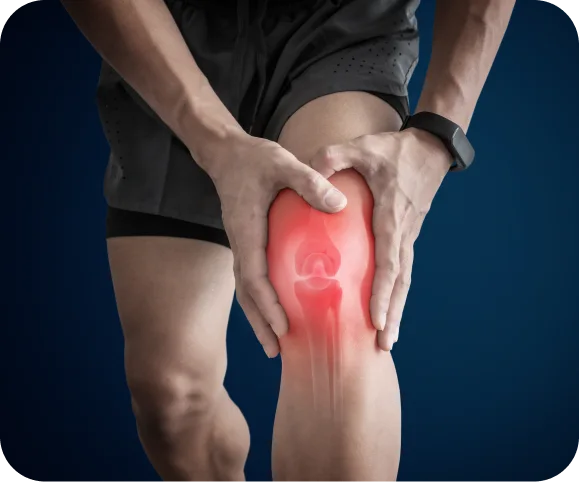


Meniscus tears are among the most common knee injuries, and their repair remains a cornerstone of orthopedic care. The meniscus acts as a cushion, stabilizer, and shock absorber within the knee, making its preservation critical for long-term joint health. Traditionally, meniscus repair techniques required passing sutures from the inside of the knee to the outside (inside-out) or from the outside to the inside (outside-in). While these approaches are effective, they involve risks, particularly to neurovascular structures located posteriorly in the knee.
Recent advancements in surgical technology have introduced all-inside meniscus repair techniques, including specialized devices that allow surgeons to perform precise suture placement entirely within the joint. These innovations not only reduce the risk of injury to nearby nerves and vessels but also enhance the quality of repair and the likelihood of successful healing.
General Points
- Understanding the Neurovascular Risks in Meniscus Repair
- How All-Inside Techniques Enhance Safety
- The Circumferential Compression Stitch: Uniform Repair and Healing
- Comparative Safety: All-Inside vs. Traditional Techniques
- Clinical Considerations and Preoperative Planning
- Case Examples and Anatomical Insights
- Looking Ahead: Safer Meniscus Repair for Better Patient Outcomes
Understanding the Neurovascular Risks in Meniscus Repair
The posterior aspect of the knee contains vital structures such as the popliteal artery, the popliteal vein, and the common peroneal nerve. Damage to these structures during meniscus repair can have serious consequences, including vascular injury, bleeding, or nerve dysfunction affecting sensation and muscle control in the lower leg.
Traditional inside-out or outside-in repair techniques require passing needles or sutures through the posterior capsule, creating a potential path for accidental injury. Imaging and cadaveric studies have shown that the distance between the posterior horn of the lateral meniscus and the popliteal artery can be as little as 1 cm, particularly in patients with smaller body frames. The risk is further influenced by knee flexion angle, presence of joint effusion, and anatomical variations between individuals. This makes precise surgical technique essential to minimize neurovascular complications.

How All-Inside Techniques Enhance Safety
All-inside meniscus repair techniques allow sutures to be placed entirely within the joint, avoiding posterior capsule penetration. By eliminating the need for posterior needle passes, these approaches significantly reduce the risk of injury to nearby nerves and blood vessels.
Specialized devices designed for all-inside repair provide controlled suture deployment. Many incorporate mechanisms to stabilize the suture and prevent inadvertent penetration beyond the meniscus. By encasing the meniscus during suture placement, these devices ensure that repair is both secure and safe, even when operating near delicate neurovascular structures.
Arthroscopic visualization combined with these devices enables the surgeon to place sutures with precision, reducing the need for extensive surgical exposure and lowering overall procedural risk.
The Circumferential Compression Stitch: Uniform Repair and Healing
A notable advancement in all-inside meniscus repair is the circumferential compression stitch. This technique wraps the suture around the meniscus tear, creating uniform compression across the injured surfaces. The consistent apposition of meniscal tissue promotes improved healing and stability, which is particularly important for complex or radial tears.
Arthroscopic performance of the circumferential stitch allows surgeons to control the tension precisely, minimizing tissue strangulation and ensuring optimal alignment of the tear edges. Studies have indicated that this technique provides biomechanical strength comparable to traditional inside-out repairs while avoiding the associated neurovascular risk.
Moreover, the circumferential compression stitch can be applied to nearly all regions of the meniscus, including posterior and middle segments, offering versatility that improves overall repair outcomes.
Comparative Safety: All-Inside vs. Traditional Techniques
Several studies have examined the safety profiles of all-inside versus inside-out techniques. Reports suggest that all-inside repair nearly eliminates posterior neurovascular injury, whereas inside-out methods, while effective, carry a measurable risk.
For example, cadaveric studies demonstrated that needle passes in inside-out techniques could come within millimeters of the popliteal artery, depending on knee flexion. Even with careful surgical planning, slight variations in anatomy or needle trajectory can lead to vascular compromise. In contrast, all-inside devices, by containing the suture within the joint, remove this variable entirely, offering a safer alternative for posterior horn tears.
These findings are especially relevant for patients with smaller knees, prior surgeries, or unusual anatomy, where traditional techniques may pose higher risk.
Clinical Considerations and Preoperative Planning
While the safety advantages of all-inside repair are clear, careful preoperative assessment remains critical. MRI scans provide valuable information about the tear location, meniscus morphology, and the proximity of neurovascular structures. Surgeons use this data to select the optimal repair technique and device, adjusting the angle of knee flexion and portal placement to further minimize risk.
Patient factors such as age, body habitus, and activity level also influence surgical planning. By integrating imaging, anatomical knowledge, and arthroscopic technology, surgeons can tailor repair strategies to each patient, balancing safety and long-term joint preservation.
Case Examples and Anatomical Insights
Consider a patient with a posterior horn tear of the lateral meniscus. In a traditional inside-out repair, needle passes risk penetrating the thin posterior capsule near the popliteal vessels. In contrast, all-inside repair with a circumferential compression stitch allows complete repair from within the joint, with sutures encircling the tear without exiting the capsule. This approach maintains meniscal integrity and avoids potentially dangerous posterior passes.
Another scenario involves a patient with a radial tear close to the meniscal root. Here, uniform compression using circumferential sutures ensures that tissue edges are held together effectively while avoiding the posterior neurovascular bundle. These examples highlight how modern techniques enhance both safety and mechanical stability.
Looking Ahead: Safer Meniscus Repair for Better Patient Outcomes
The evolution of meniscus repair techniques, particularly all-inside methods and innovations such as the circumferential compression stitch, represents a major advancement in orthopedic surgery. These approaches allow for secure repair while dramatically reducing the risk to vital neurovascular structures. Patients benefit from improved healing, lower complication rates, and a safer surgical experience.
Careful surgical planning, patient-specific assessment, and use of modern devices collectively contribute to safer outcomes. Patients can take reassurance in knowing that ongoing advancements in meniscus repair continue to prioritize both safety and long-term joint health.